Rose-Hulman Student Startup Earns Spot at Y Combinator Accelerator, $500K in Funding
Monday, April 20, 2026
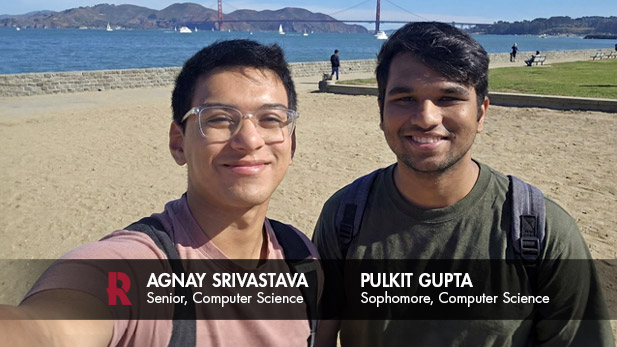
Tsenta, an AI-powered startup founded by Rose-Hulman students Agnay Srivastava and Pulkit Gupta, was selected for the prestigious Y Combinator startup accelerator and funding.
Rose-Hulman students and entrepreneurs Agnay Srivastava and Pulkit Gupta will learn from some of the most celebrated entrepreneurs after being accepted into Y Combinator — the startup accelerator that helped launch companies such as DoorDash, Airbnb, Instacart, and Reddit — to advance their own startup. Srivastava, a senior computer science major, and Gupta, a sophomore computer science major, also received $500,000 in Y Combinator funding to develop their product, Tsenta, an AI-powered job application tool.
Frustrated by the job and internship application process, where they often found themselves inputting the information on their resumes into dozens of identical forms, Srivastava and Gupta founded Tsenta to automate and optimize their applications. The tool matches students with online job postings and manages their applications, saving users hours each day, while still allowing them to have full control and editing ability over their application content.
"You need not only quantity, but quality of applications…doing all of this usually takes you somewhere between 2-3 hours every single day," Srivastava explained. "It seems like one of those places that AI could really help."
Tsenta differs from other auto-applier solutions currently on the market in that it allows users to complete multiple applications simultaneously while remaining transparent and affordable. The product currently supports over 10 job application platforms including Workday, Greenhouse, and Ashby, and is continuously adding more based on user demand.
"I don't think I've ever had this much fun coding anything else," said Srivastava. "It's a combination of being on the cutting edge and something that genuinely solved a problem for us and a lot of other people."
Tsenta was built using skills Srivastava and Gupta learned at Rose-Hulman, including through their coursework in database systems, web development, and human-computer interface requirements engineering.
"One great thing that Rose-Hulman does is it makes you unafraid of diving deep into the technical details of some of the stuff we've been building," said Srivastava.
Gupta agreed, noting, "Rose-Hulman's academically rigorous and hands-on computer science curriculum gave me a strong foundation in software design, systems, and problem-solving. Combined with a highly focused campus environment, it made it easier to dive deep on complex problems and turn ideas into real, working products like Tsenta."
For the founders, acceptance into the Y Combinator startup accelerator was always the goal. Srivastava and Gupta will spend three intense months working with investors and Y Combinator alumni to rapidly advance Tsenta's development.
"It's an amazing opportunity to enter the San Francisco startup ecosystem, learn from founders who have built impactful companies, and accelerate Tsenta by learning directly from their experiences," said Gupta.
The accelerator builds a community of entrepreneurs, including talks from Y Combinator alumni, before Demo Day, where the startups have the opportunity to show their progress and earn even more funding.
"It's definitely an honor to be amongst these companies and start our journey there," said Srivastava. "Pulkit and I were jumping when we saw the Y Combinator interview request. I keep reliving that moment in my head so many times."
Because of the rigor of its program and the success of its alumni, it is challenging to earn a spot at Y Combinator. Srivastava and Gupta earned a referral after connecting with other startup founders who had gone through the Y Combinator program at a Hackathon at Georgia Tech, in which they won two categories.
The Georgia Tech Hackathon was a 36-hour coding competition that connected 1,500 college students to major company sponsors such as Perplexity, Visa, CapitalOne, T Mobile, and other Y Combinator startups. It turned out to be a life-changing weekend for Srivastava and Gupta, altering the trajectory of their startup.
Now, Srivastava is building the foundation to bring a Hackathon event and its opportunities to Rose-Hulman for other students.
"We want to create this ecosystem within Rose-Hulman for doing more entrepreneurial things and plan to work closely with them after Y Combinator,” Srivastava said.
Srivastava and Gupta will represent Rose-Hulman and Tsenta in the summer 2026 Y Combinator accelerator cohort. As part of the Advancing by Design strategic plan, Rose-Hulman seeks to instill a mindset of innovation, discovery, and entrepreneurship in students like Srivastava and Gupta through on-campus resources and events — such as Engineerathon, Sawmill Society Weekend, and ESCALATE — for students at every stage of their startup journey. Visit rhit.edu/entrepreneurship for more information about campus entrepreneurial opportunities.
Frustrated by the job and internship application process, where they often found themselves inputting the information on their resumes into dozens of identical forms, Srivastava and Gupta founded Tsenta to automate and optimize their applications. The tool matches students with online job postings and manages their applications, saving users hours each day, while still allowing them to have full control and editing ability over their application content.
"You need not only quantity, but quality of applications…doing all of this usually takes you somewhere between 2-3 hours every single day," Srivastava explained. "It seems like one of those places that AI could really help."
Tsenta differs from other auto-applier solutions currently on the market in that it allows users to complete multiple applications simultaneously while remaining transparent and affordable. The product currently supports over 10 job application platforms including Workday, Greenhouse, and Ashby, and is continuously adding more based on user demand.
"I don't think I've ever had this much fun coding anything else," said Srivastava. "It's a combination of being on the cutting edge and something that genuinely solved a problem for us and a lot of other people."
Tsenta was built using skills Srivastava and Gupta learned at Rose-Hulman, including through their coursework in database systems, web development, and human-computer interface requirements engineering.
"One great thing that Rose-Hulman does is it makes you unafraid of diving deep into the technical details of some of the stuff we've been building," said Srivastava.
Gupta agreed, noting, "Rose-Hulman's academically rigorous and hands-on computer science curriculum gave me a strong foundation in software design, systems, and problem-solving. Combined with a highly focused campus environment, it made it easier to dive deep on complex problems and turn ideas into real, working products like Tsenta."
For the founders, acceptance into the Y Combinator startup accelerator was always the goal. Srivastava and Gupta will spend three intense months working with investors and Y Combinator alumni to rapidly advance Tsenta's development.
"It's an amazing opportunity to enter the San Francisco startup ecosystem, learn from founders who have built impactful companies, and accelerate Tsenta by learning directly from their experiences," said Gupta.
The accelerator builds a community of entrepreneurs, including talks from Y Combinator alumni, before Demo Day, where the startups have the opportunity to show their progress and earn even more funding.
"It's definitely an honor to be amongst these companies and start our journey there," said Srivastava. "Pulkit and I were jumping when we saw the Y Combinator interview request. I keep reliving that moment in my head so many times."
Because of the rigor of its program and the success of its alumni, it is challenging to earn a spot at Y Combinator. Srivastava and Gupta earned a referral after connecting with other startup founders who had gone through the Y Combinator program at a Hackathon at Georgia Tech, in which they won two categories.
The Georgia Tech Hackathon was a 36-hour coding competition that connected 1,500 college students to major company sponsors such as Perplexity, Visa, CapitalOne, T Mobile, and other Y Combinator startups. It turned out to be a life-changing weekend for Srivastava and Gupta, altering the trajectory of their startup.
Now, Srivastava is building the foundation to bring a Hackathon event and its opportunities to Rose-Hulman for other students.
"We want to create this ecosystem within Rose-Hulman for doing more entrepreneurial things and plan to work closely with them after Y Combinator,” Srivastava said.
Srivastava and Gupta will represent Rose-Hulman and Tsenta in the summer 2026 Y Combinator accelerator cohort. As part of the Advancing by Design strategic plan, Rose-Hulman seeks to instill a mindset of innovation, discovery, and entrepreneurship in students like Srivastava and Gupta through on-campus resources and events — such as Engineerathon, Sawmill Society Weekend, and ESCALATE — for students at every stage of their startup journey. Visit rhit.edu/entrepreneurship for more information about campus entrepreneurial opportunities.