
Requirements for Bachelor of Science in Civil Engineering
A civil engineering degree will provide you with the knowledge and technical ability to perform essential engineering functions in the design, management and construction industries, among others. As a civil engineer, you can expect to work with public works in some capacity.
- 142 Required Credits
- 52 Elective Credits
194
Total Credits
Minor in Sustainability
A minor in sustainability provides hands-on experiences for student teams working on real-world problems related to sustainability. This could include design projects, scientific research, modeling-based projects, or studies to improve campus sustainability. Students in the program will also have the opportunity to examine, analyze, and reflect upon sustainability as it relates to their project or research work.
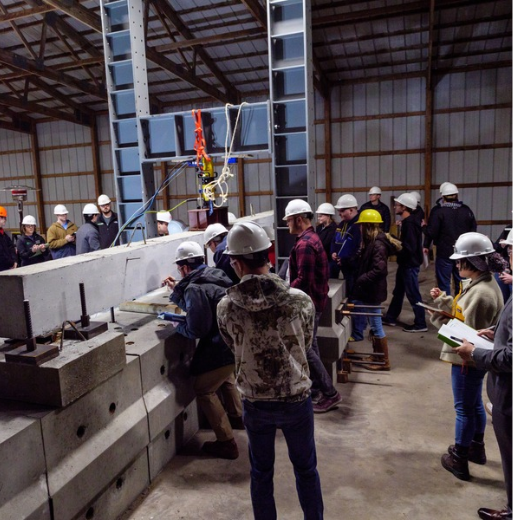
Hands-On Opportunities
Earn Your Bachelor’s and Master’s Degree in 4 Years with Rose Squared Program
The Rose Squared concurrent degree program (R2) allows you to put your qualifying Advanced Placement, International Baccalaureate and other earned college credits in science, math and the humanities to work by earning both degrees at no additional cost.
In the R2 program, you take graduate-level coursework while pursuing your undergraduate engineering education. Work toward two degrees — a Bachelor of Science in engineering, math or science (BS) and a Master of Environmental Engineering (MEE) or Master of Structural Engineering (MSE) — in just four years.
The extra training in the Master of Civil Engineering program lets you work on more challenging projects, which accelerates your opportunities to manage design projects. Plus, your time as a graduate student typically counts toward your Professional Engineer license.
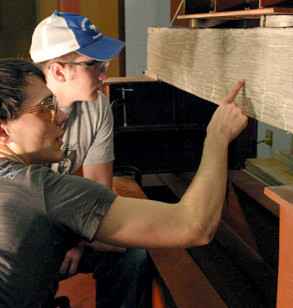
Structural Engineer
Structural engineers are heavily involved in designing structures, such as buildings, bridges and tunnels. Frequently, structural engineers work as consultants to architects or contractors.

Environmental and Water Resource Engineer
Engineers working in this specialty manage natural resources and determine how they should be handled including waste disposal, pollution and flood control.

Construction Engineer
Construction engineers are desirable for their engineering and leadership expertise that are critical to help ensure building projects are completed on time and under budget.