Students who successfully complete this course should be able to meet the same outcomes as those from CSSE 120 and CSSE 220. From 220:
CSSE120's outcomes pertain to basic software development concepts, which you have already satisfied by virtue of your placement in this course. More information on the CSSE120 outcome are available on the CSSE120 course web site.
Outcomes from 220:
Outcome specific to 221:
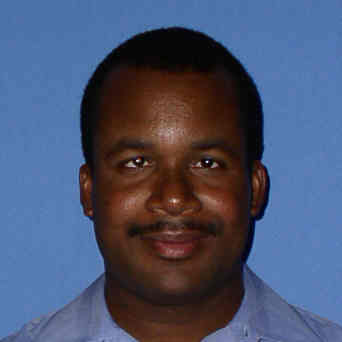
| Delvin Defoe, Associate Professor of Computer Science and Software Engineering | ||
| Email: | defoe (at) rose-hulman.edu | |
| |
Office phone: | (812) 877-8815 |
| Office address: | Moench F-214 (top floor) | |
| Home page: http://www.rose-hulman.edu/~defoe | ||
| Office hours: feel free to stop by whenever I'm in the office (I have class TWF 3 - 7 plus a few weekly meetings). Email also works. | ||
Peter Samyn, samynpd <at> rose-hulman <dot> edu
Scott Harris, harrissa <at> rose-hulman <dot> edu
Jonathan Earles, earlesja <at> rose-hulman <dot> edu
Laura Elisabeth Davey, daveyle <at> rose-hulman <dot> edu
Brandon Tom, tombn <at> rose-hulman <dot> edu
This term we will be using Piazza for class discussion. The system is tailored to getting you help fast and efficiently from classmates, TAs, and your instructor. Rather than emailing questions directly to the course staff, you are highly encouraged to post your questions and solutions (no code or direct answers to homework assignments) on Piazza.
Bookmark our class page: https://piazza.com/rose-hulman/fall2013/csse221/home.

Big Java: Early Objects, 5th Edition, by Cay Horstmann
Paperback: 1072 pages
Publisher: John Wiley & Sons, Inc., 12/26/2012
ISBN: 978-1-118-43111-5
Links: Companion Site· Source code· Errata
Note: This text is not required for the course, but recommended. Some students may find it useful, other students may not need it. Any reading assignment from this text is suggested, but not required reading.
These are pre-installed on freshmen laptops. Upperclassmen can following these instructions.
We will use Moodle to post grades and materials that require restricted access (like homework solutions and surveys). All other materials for the course will be linked from Moodle, or in Subversion repositories that we will create for you.
Some of the materials on Moodle are actually links from Moodle to pages on the Rose web server, so you can access them directly without logging in to Moodle. We highly recommend that you bookmark that page in your browser, so that you do not have to log in to Moodle to get to the schedule page, etc.
Your solutions to programming problems should be well-designed and well-documented. I will suggest working on some programming problems with another person and on other programs individually.
I will assign several written homework problems and in-class exercises. They will usually be short thought problems, mathematical analyses, or algorithm-design exercises. I expect you to think through them carefully and write your answers legibly and clearly (if you can’t write it neatly, type it). On some problems, not only the correctness but also the quality of your solution will determine your grade. Some of the problems will be straightforward practice with concepts from the course; others will require creative solutions. Don’t put them off until the last minute!
When problems are designated to allow you to work with a partner, if you need help finding people to work with, let me know, and I will put you in touch with other students who indicate a similar need. If you do an assignment with someone else, it is your responsibility to not allow anyone’s name (including your own) to be placed on the submitted program if that person does not understand the solution.
Each submitted program file should include your name(s), and a description of the file’s contents in comments at the top of your files. They should have reasonable and consistent comments, style, and indentation. They should not contain lines that are more than 80 characters long (causing wraparound and general illegibility of printouts).
Grades for programming problems will be based on correctness (mostly), efficiency (some), and style.
Quizzes and written assignments must be completed on time if you want credit for them.
However, we all have days when we are extremely busy, or times when a program takes longer to complete than we expect it will. To account for this, I give each student a “late day bank account” that starts with two late days.
Notification for a deposit or withdrawal: just complete the Late Day Bank Survey on Moodle before the assignment is due. That is so I can know when it is okay to post a solution or discuss an assignment in class.
Some particular assignments may be designated as ”no late days“ assignments. This might happen because:
Note: You must earn a C or better in this course to receive the 8 credits for the course. You also need to earn a C or better to meet the prerequisite requirements for CSSE230.
| Weight | Criteria |
|---|---|
| 5% | In-class quizzes |
| 40% |
Weekly assignments (programming and written) and the capstone
project:
|
| 15% | Student presentations, or "capsules" |
| 40% | Exams |
Final grades are also contingent on the following:
I will do my best to conform to the Rose-Hulman definition of the various grades, as described in the Academic Rules and Procedures. Note in particular that the phrase “thorough competence to do excellent work” appears there in the description of the “B” grade (not “A”), and it further states that “B” and “B+” will not be given for mere compliance with the minimum essential standards of the course.
"In engaged learning settings, students are responsible for their own learning; they take charge and are self-regulated. They define learning goals and problems that are meaningful to them; have a big picture of how specific activities relate to those goals; develop standards of excellence; and evaluate how well they have achieved their goals. They have alternative routes or strategies for attaining goals--and some strategies for correcting errors and redirecting themselves when their plans do not work. They know their own strengths and weaknesses and know how to deal with them productively and constructively. Engaged learners are also able to shape and manage change."
Even in the best classes, it is sometimes hard to stay focused for 105 minutes, especially with a laptop in front of you! Laptops are necessary for this class. However, IM and news can draw you in longer than you might have hoped, so that you lose valuable class information.
Research also shows that people are not as good at multitasking as they think they are! (Rubinstein et al., "Executive Control of Cognitive Processes in Task Switching", 2001; http://www.apa.org/pubs/journals/releases/xhp274763.pdf)
Therefore, I strongly encourage you to turn off communications (IM and email) software and only use other software for things directly related to class. If you choose to use non-class-related software during class, then please sit in the next-to-last row (no one should sit in the last row). This will prevent your classmates from being distracted by what is on your screen.
Recall the Institute policy on academic misconduct:
For this class, collaboration is encouraged, and sometimes required, on assignments. When you collaborate, you must:“Rose-Hulman expects its students to be responsible adults and to behave at all times with honor and integrity.”
Plagiarism or cheating will result in a negative score (i.e., less than zero) for the assignment or exam. Egregious cases will result in a grade of “F” for the course. More importantly, such dishonesty steals your own self-esteem. So don’t cheat.
If you have any questions, please ask.
Written by Delvin Defoe, based on lots of wording and format from Matt Boutell, Curt Clifton and Claude Anderson.
Caveat: I reserve the right to modify the course content, schedule, policies, etc. outlined in this syllabus.