Why isn't the World Wide Wait even longer?
The answer is image compression. Modern mathematics (developed
in the last 15-20 years), electrical engineering (DSP), and computer science
have been responsible for the development of good image compression algorithms.
The course will cover the mathematical basis of many of the ideas behind
image processing such as filtering, filter banks, the discrete Fourier
and cosine transforms and the discrete wavelet transform. All of this will
be balanced by concrete applications of these ideas to various image
processing problems with a special emphasis on image compression. The images
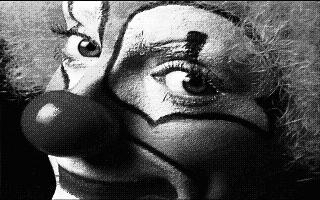
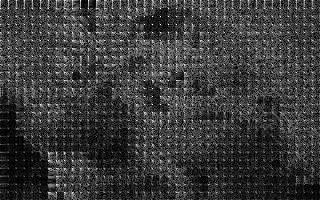
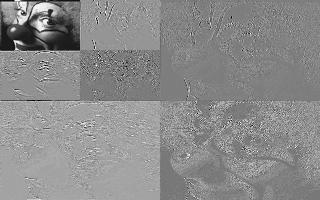
may the mathematics all concrete as the two pictorial illustrations of
Discrete Cosine Transform (DCT) based JPEG compression and Discrete
Wavelet Transform (DWT) based JPEG 2000 compression show.
The course is aimed at juniors and seniors, though any mathematically well-prepared student will benefit from the course. The basic mathematical ideas can be built upon matrix algebra and some Fourier series. Previous exposure to Digital Signal Processing is helpful but not essential. The course work will consist of homework assignments, exams and one or two projects. The computational tools of the course will be MATLAB, and, to some extent, MAPLE . It is not necessary to know these tools beforehand, though some computational expertise is expected (e.g. one of MATLAB, MAPLE, or C++).
This course is based on many previous offerings of the course, including a joint development effort by Allen Broughton and Ed Doering years ago, a section by Roger Lautzenheiser in Winter 01-02, and recent offereings by Kurt Bryan. As the course ahs devleoped we have concentrated on image compression topics, filter banks and the discrete wavelet transform, so that enough time can be spent on concrete application of these topics. In particular we expect to spend some time understanding the mathematics behind the current DCT-based JPEG (see picture above) compression method and the new wavelet-based JPEG 2000 compression method (see picture above) that is expected to debut in the next few years of years. By learning the mathematical foundations as well as their application, we expect that students will gain background to further their learning of image processing methods.
I particularly welcome any student who wants to do a related Imaging Certificate project after taking the course.
Any questions? Send me email: allen.broughton@rose-hulman.edu
Return to the Fall
2006 Math Electives List
Return to the RHIT
Mathematics Courses Information Page